Address: 555 Iron Bridge Rd STE 14 Freehold Township, NJ 07728
LANAP & LAPIP™ Laser Dentistry
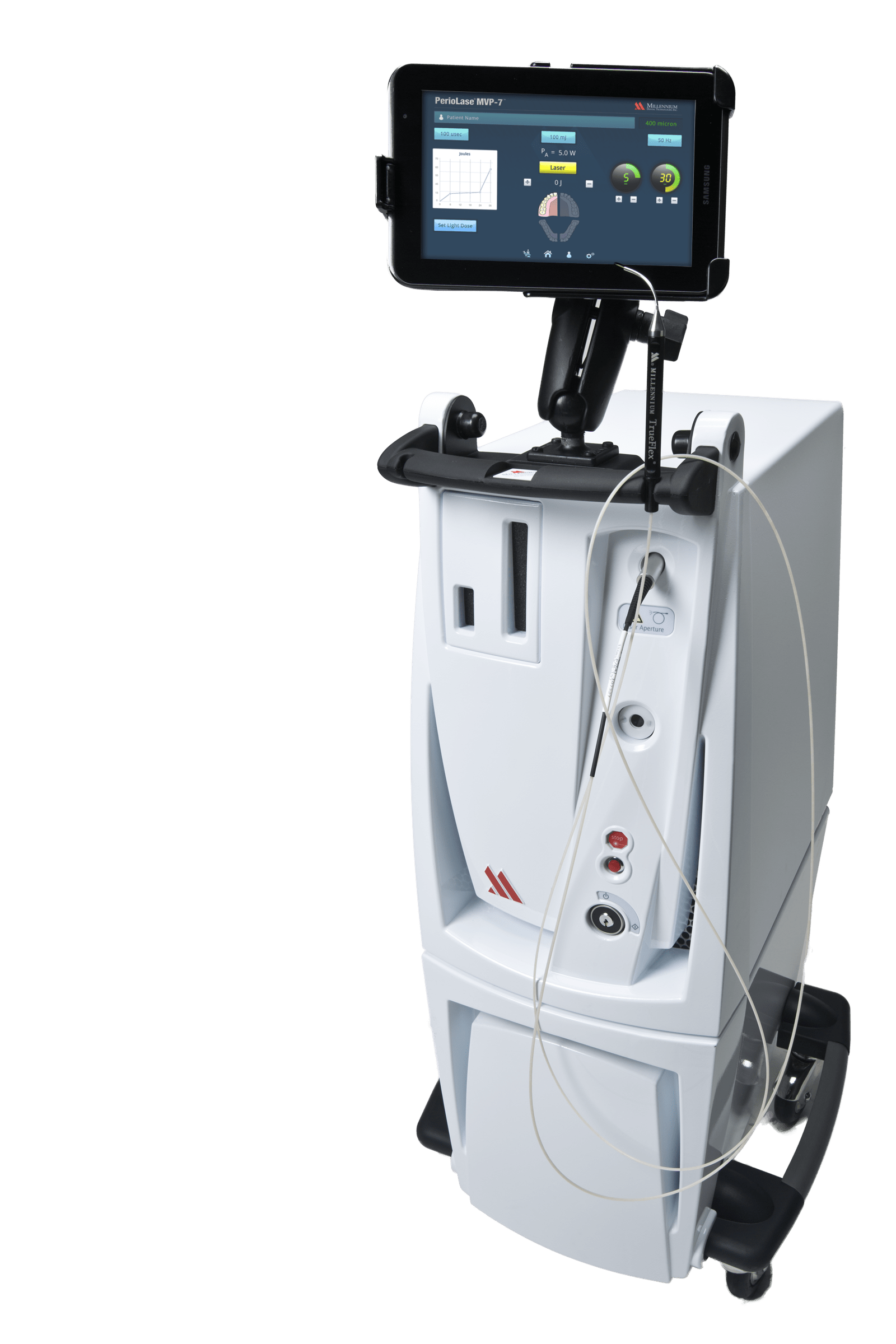
LAPIP™ Protocol & LANAP Procedure Freehold, NJ
LANAP
A Minimally Invasive Laser Treatment to Fight Advanced Periodontal Disease.
As periodontal disease progresses, bacteria thriving in deep gingival pockets attacks and destroys the gum and bone tissue that hold your teeth in place.
With the advanced LANAP laser procedure, we can actually regrow and reattach that missing gum and bone. LANAP stands for Laser-Assisted “New Attachment” Protocol.
No Cutting, No Grafting, No Suturing
LANAP eliminates the cutting, grafting and sutures of traditional surgery. Instead, Dr. Aldredge uses a precisely focused laser beam to clean bacteria, debris and diseased gum tissue away from healthy teeth and gum tissue.
By clearing out invasive material, the LANAP treatment creates the ideal conditions the body needs to heal itself. Gum and bone tissue naturally regenerates and reattaches to teeth, holding them securely in place with renewed support and protection.
LANAP procedure Saves Teeth
LANAP vs Traditional Surgery
The LANAP laser-assisted procedure is minimally invasive compared with conventional surgery, resulting in less bleeding, less swelling, and less discomfort during and after treatment.

LAPIP™
Despite our best efforts, we are seeing more and more complications with implants. This is a condition we call “Peri-Implantitis”. Many times, implants can get infected under the gum line, which can result in bone loss around the implant, and in some cases loss of the implant itself. Complications due to systemic disease, medications and simply enough, aging can all lead to this problem.
Until recently, the only treatment for an “ailing” implant was either extensive surgical repair and in most cases, removal of the implant and waiting for a new one to be placed.
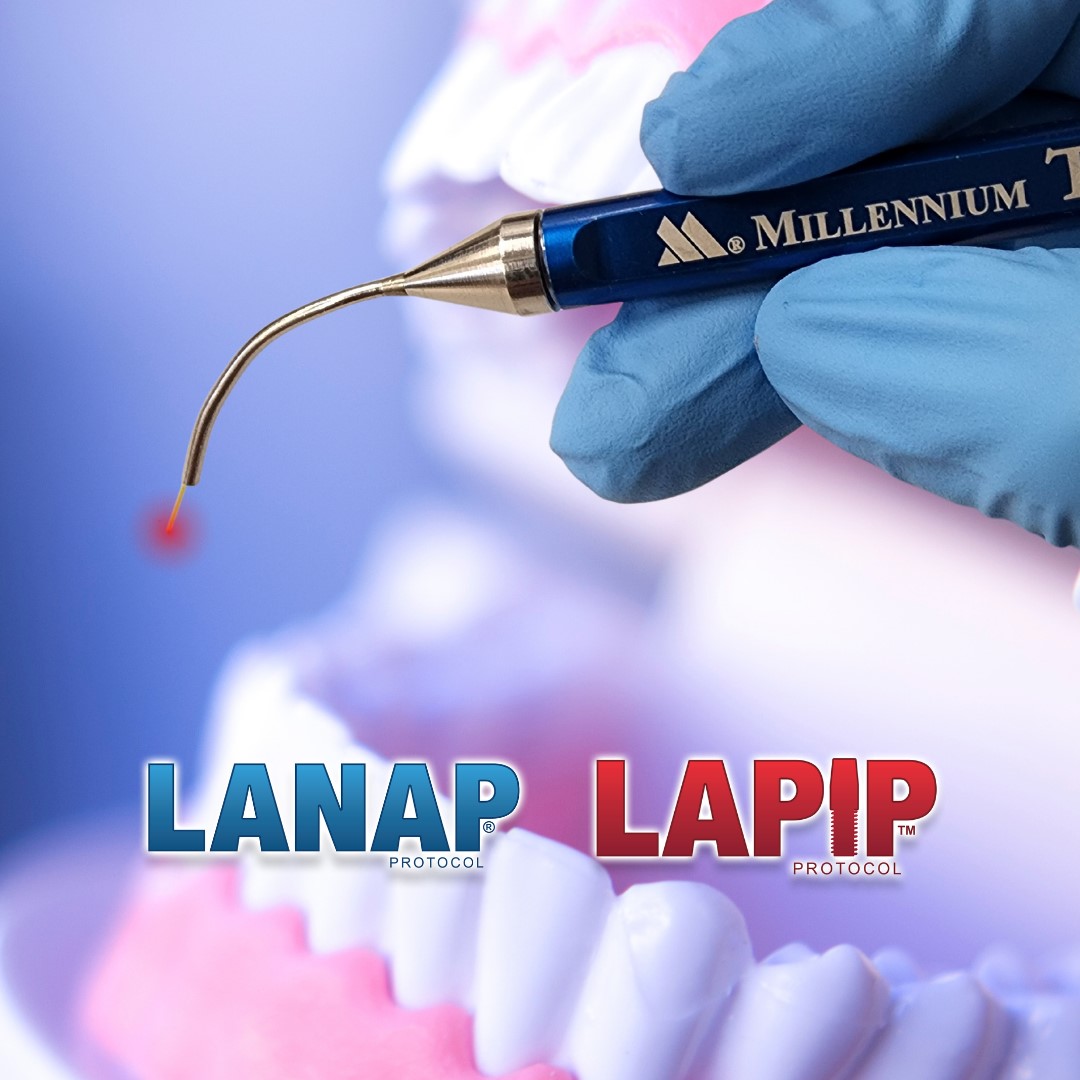
With the advent of LAPIP, which is a specific laser surgery procedure (does not involve a scalpel or stitches), we are able to treat the infections and arrest the disease, and in some cases regenerate new bone around the implant itself!
LAPIP — which stands for Laser Assisted Peri-Implant Procedure, is the only FDA cleared laser procedure to treat ailing dental implants.
LAPIP, or Laser Assisted Peri-Implant Procedure, is a laser treatment that uses a thin fiber to treat peri-implantitis. Peri-implantitis is a condition where the tissue around a dental implant becomes inflamed and/or bone loss around the implant.
How it works
⦁ A dental professional inserts a fiber-optic tip with a laser into the treatment site
⦁ The laser’s energy targets and eliminates diseased tissue and bacteria
⦁ The laser leaves healthy tissue and the dental implant intact
⦁ The laser forms a blood clot that protects the area from re-infection
⦁ The clot provides a secure enclosure for the implant to re-integrate with the jawbone
Benefits
⦁ LAPIP is a non-invasive, low-risk procedure
⦁ It’s the only FDA-cleared laser procedure to treat dental implants
⦁ It can regenerate new bone in some cases
⦁ Patients typically experience less discomfort than traditional surgery
Contact us today to learn if the LANAP procedure or LAPIP™ protocol is right for you.
Gallery


LANAP Laser Dentistry in Freehold, NJ
LANAP
As periodontal disease progresses, bacteria thrive in deep gingival pockets, attacking and destroying the gum and bone tissue that support your teeth. Fight against this progression with our minimally invasive treatment, Laser-Assisted “New Attachment” Protocol (LANAP).
Mid-Atlantic Periodontics, P.C.’s approach to LANAP laser dentistry in Freehold, NJ, allows us to regrow and reattach the lost gum and bone. This procedure eliminates the need for cutting, grafting, and sutures typical in traditional surgery. Instead, Dr. Faldu uses a precisely focused laser beam to eliminate bacteria, debris, and diseased gum tissue while preserving healthy teeth and gum tissue.
By removing harmful materials, our LANAP laser dentistry treatment creates optimal conditions for the body to heal. This enables the natural regeneration and reattachment of gum and bone tissue to the teeth, providing renewed support and protection. That’s why this laser-assisted procedure is minimally invasive compared to conventional surgery, leading to less bleeding, reduced swelling, and decreased discomfort during and after treatment.
LANAP procedure Saves Teeth
LANAP vs Traditional Surgery
The LANAP laser-assisted procedure is minimally invasive compared with conventional surgery, resulting in less bleeding, less swelling, and less discomfort during and after treatment.
LAPIP™
“Peri-implantitis” has become a common issue in dentistry. It occurs when implants become infected below the gum line, which may lead to bone loss around the implant and, in some cases, the loss of the implant itself. Factors such as systemic diseases, medications, and the natural aging process can all contribute to this issue. Until recently, the only options for treating an affected implant were extensive surgical repairs or removing the implant, followed by a waiting period before placing a new one.
With the introduction of Laser Assisted Peri-Implant Procedure (LAPIP), we can now effectively treat infections, halt the disease process, and regenerate new bone around the implant in some cases. It is the only FDA-cleared laser treatment designed specifically for dental implants, utilizing a thin fiber to address peri-implantitis.
How it works
Our dentist inserts a fiber-optic laser tip into the treatment area where the laser’s energy effectively targets and removes diseased tissue and bacteria, while preserving healthy tissue and the dental implant. Additionally, the LAPIP laser treatment helps form a blood clot that protects the area from re-infection, creating a secure environment for the implant to integrate with the jawbone.
Benefits
- LAPIP is a non-invasive, low-risk procedure.
- It’s the only FDA-cleared laser procedure to treat dental implants.
- It can regenerate new bone in some cases.
- Patients typically experience less discomfort than with traditional surgery.
Contact us now to learn if the LANAP and LAPIP laser treatments are right for you.